Oddly enough, on a wet, dreary day wandering around Swansea University campus, Sparklehorse’s third album (and personal favourite) seems optimistic, even happy. Slight contradiction really, as Mark Linkous has been repeatedly hailed as the best writer of moving, slow, and quiet, sad simple songs around. Also taking into account his random weird lyrics (I.e. “I’m the dog that ate your birthday cake”, from this album’s title track) and interesting song titles of course.
With the promise of a new album being written, and also the promise of it not coming any time soon, it’s good to sink into reliable classics like ‘Sea Of Teeth’ and ‘Good Day’, which go about their simple brilliance with hushed vocals, accompanied by even quieter strings and pianos. PJ Harvey adding her vocals to ‘Apple Bed’ and ‘Piano Fire’ amongst others is a great touch too. And ‘King Of Nails’ still gets my vote for best possible single with it’s whammy bar solo.
Considering its been 4 years since ‘It’s A Wonderful Life’ was released, it’s a nice pleasure to work through Linkous’ work and find plenty to keep you occupied till he gets around to releasing the 4th Sparklehorse album. Musical retarded genius? Yeah, close enough.


24.10.05
Imogen Heap - Speak for Yourself - Megaphonic 001
Belonging to a generation where listening to solo female singers is viewed as best left to those of a Dad rock persuasion (although obviously not my Dad) thanks principally to Dido, whilst browsing through my iTunes this Sunday afternoon I was surprised to see the last three albums added were all exactly that. Along with offerings by Natacha Atlas and Jem, I remembered Imogen Heap’s album, Speak for Yourself. Her second solo album (when not singing with Frou Frou) released this year is simply put, essential Autumnal listening.
Catchy but not overtly poppy, and with an ethereal tone that becomes addictive, this album is a small wonder. Electronic in tone, Heap’s vocals draw you in and allow you to see the beauty around you as you walk down a leaf strewn lane to your Post-Communist Russia seminar. Whilst an album that never truly settles in one groove, it flows in the way all albums should. Try to opener Headlock or Goodnight & Go to be convinced.
Catchy but not overtly poppy, and with an ethereal tone that becomes addictive, this album is a small wonder. Electronic in tone, Heap’s vocals draw you in and allow you to see the beauty around you as you walk down a leaf strewn lane to your Post-Communist Russia seminar. Whilst an album that never truly settles in one groove, it flows in the way all albums should. Try to opener Headlock or Goodnight & Go to be convinced.
23.10.05
Jimmy Smith’s Last Four Blue Notes - I’m Movin’ On (32750); Bucket! (24550); Rockin’ The Boat (76755); Prayer Meetin’ (76754)
Every musician who put a Blue Note album on the pop charts in the early 1960s left Blue Note shortly afterwards to record for another label. Francis Wolf visited Europe in the summer of 1970, to produce Hank Mobley’s The Flip in Paris, and was interviewed on the BBC’s jazz programme one Sunday night. He explained what happened.
 Blue Note was a cheapskate company with high standards. Normal first year sales of their albums were about 7,000. The breakeven point was about 2,500. But only about half the albums the company recorded came out at the time. Clearly, the company was profitable, since the records would sell for years, or decades, but not spectacularly so. Alfred Lion and Francis Wolf wanted to record the musicians they thought were best. To manage that, they needed to offer the musicians something they couldn’t get from other companies; and to do so within very tight budgets. They came up with the idea of a cash payment that would be greater than the standard Musicians Union scale. The kick was that there were to be no royalties.
All went well until Jimmy Smith, Donald Byrd and Lou Donaldson got records onto the pop charts. Not having read their contracts, they went to Blue Note and asked for their royalties and were told, and I quote, “fuck off, you don’t get no royalties!”
So they did. Smith was the first. He went to Verve and recoded Bashin’ and got a top 5 single out of it, as well as a top 10 album. “Oi! You’re still contracted to us!” was the immediate response from Blue Note. Smith owed Blue Note four albums under his contract. After much hassle, Blue Note got him into Van Gelder’s studio on 31 January 1963. Between then and 8 February, he cut four albums. The reissue in 2004 on CD of the last two means that they are all out again.
Blue Note did well out of those nine days; spinning out the release of the albums over four years, they got three of them onto the pop album charts. Not only were they popular; they were really very good records. Every one is a mellow, relaxed groove in which Smith doesn’t try to prove anything. Each one includes a classic blues ballad: T’ain’t No Use; Careless Love; Please Send Me Someone To Love; and I Almost Lost My Mind. These set the feeling for each album, but there are a couple of Calypsos in there; plenty of hard-rocking grooves that would have done well on juke boxes; some gospel songs like Just A Closer Walk, When The Saints Go Marching In and John Brown’s Body; none of this material was the kind of stuff that Smith usually recorded so, despite the relaxed feel to the albums, Smith and his colleagues were exploring somewhat new territory.
Apart from Bucket!, which just featured Smith’s regular trio with Quentin Warren and Donald Bailey, the albums featured other Blue Note stars, who hadn’t yet left for pastures new.
I’m Movin’ On – an obvious message – features Grant Green, and is the only one that didn’t make the pop charts, possibly because it wasn’t released until after Blue Note had been sold in 1967. The rapport between Green and Smith is astounding, since they didn’t usually play together. The CD has two extra tracks from the session that only came out on a Japanese LP.
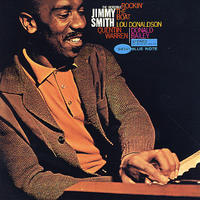 Rockin’ The Boat features Lou Donaldson. It’s the only one of the four that I didn’t get on LP, though I did get a 45 off the LP. It has the greatest grooves on it and no bonus tracks. It also features John Patton – playing tambourine(!) - on three tracks. Patton was in Donaldson’s band at the time and, the previous week, Lou had just recorded his last Blue Note for several years. Finally, Prayer Meetin’ features Stanley Turrentine. Turrentine had been on the two hit albums - Midnight Special and Back At The Chicken Shack - that Smith recorded on 25 April 1960, so he was an obvious choice for Smith’s farewell party. Unfortunately, the two bonus tracks on the CD were recorded in June 1960, at a duff session with, strangely, Sam Jones on bass. They really don’t fit in with the rest.
Listening to all four albums together is wonderful. Although there are different stars taking their own approaches and a wide variety of source material, the way it’s handled shows a high degree of integration, both in the direction of the music and the relationships between the musicians. It’s about three hours of constantly satisfying groove - AM
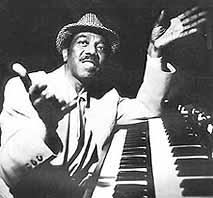 Blue Note was a cheapskate company with high standards. Normal first year sales of their albums were about 7,000. The breakeven point was about 2,500. But only about half the albums the company recorded came out at the time. Clearly, the company was profitable, since the records would sell for years, or decades, but not spectacularly so. Alfred Lion and Francis Wolf wanted to record the musicians they thought were best. To manage that, they needed to offer the musicians something they couldn’t get from other companies; and to do so within very tight budgets. They came up with the idea of a cash payment that would be greater than the standard Musicians Union scale. The kick was that there were to be no royalties.
All went well until Jimmy Smith, Donald Byrd and Lou Donaldson got records onto the pop charts. Not having read their contracts, they went to Blue Note and asked for their royalties and were told, and I quote, “fuck off, you don’t get no royalties!”
So they did. Smith was the first. He went to Verve and recoded Bashin’ and got a top 5 single out of it, as well as a top 10 album. “Oi! You’re still contracted to us!” was the immediate response from Blue Note. Smith owed Blue Note four albums under his contract. After much hassle, Blue Note got him into Van Gelder’s studio on 31 January 1963. Between then and 8 February, he cut four albums. The reissue in 2004 on CD of the last two means that they are all out again.
Blue Note did well out of those nine days; spinning out the release of the albums over four years, they got three of them onto the pop album charts. Not only were they popular; they were really very good records. Every one is a mellow, relaxed groove in which Smith doesn’t try to prove anything. Each one includes a classic blues ballad: T’ain’t No Use; Careless Love; Please Send Me Someone To Love; and I Almost Lost My Mind. These set the feeling for each album, but there are a couple of Calypsos in there; plenty of hard-rocking grooves that would have done well on juke boxes; some gospel songs like Just A Closer Walk, When The Saints Go Marching In and John Brown’s Body; none of this material was the kind of stuff that Smith usually recorded so, despite the relaxed feel to the albums, Smith and his colleagues were exploring somewhat new territory.
Apart from Bucket!, which just featured Smith’s regular trio with Quentin Warren and Donald Bailey, the albums featured other Blue Note stars, who hadn’t yet left for pastures new.
I’m Movin’ On – an obvious message – features Grant Green, and is the only one that didn’t make the pop charts, possibly because it wasn’t released until after Blue Note had been sold in 1967. The rapport between Green and Smith is astounding, since they didn’t usually play together. The CD has two extra tracks from the session that only came out on a Japanese LP.
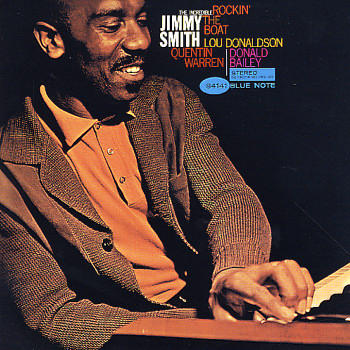 Rockin’ The Boat features Lou Donaldson. It’s the only one of the four that I didn’t get on LP, though I did get a 45 off the LP. It has the greatest grooves on it and no bonus tracks. It also features John Patton – playing tambourine(!) - on three tracks. Patton was in Donaldson’s band at the time and, the previous week, Lou had just recorded his last Blue Note for several years. Finally, Prayer Meetin’ features Stanley Turrentine. Turrentine had been on the two hit albums - Midnight Special and Back At The Chicken Shack - that Smith recorded on 25 April 1960, so he was an obvious choice for Smith’s farewell party. Unfortunately, the two bonus tracks on the CD were recorded in June 1960, at a duff session with, strangely, Sam Jones on bass. They really don’t fit in with the rest.
Listening to all four albums together is wonderful. Although there are different stars taking their own approaches and a wide variety of source material, the way it’s handled shows a high degree of integration, both in the direction of the music and the relationships between the musicians. It’s about three hours of constantly satisfying groove - AM
18.10.05
Jolie Holland - Escondida - Anti 6692-2
Got turned onto Jolie Holland by Dad's "Radio Sandy Beach". After hearing 'Do You?', I knew exactly what I'd be getting from her. A great modern blues and slightly jazzy album for those quiet nights and days where all you want is something....well....quiet.
There's nothing exactly revolutionary here, but if that's what you expected then you're listening to the wrong kind of music. Holland writes great songs that you can gently sway and think to, and that are occassionaly pretty moving; 'Damn Shame' and the aforementioned 'Do You?' are fairly direct if soft loving laments. The former in particular uses Holland's voice accompanied by just a piano.
So there we go; a great slow bluesy album to experience, each song laced with Holland's whispy, soft vocals. Also worth noting that her occassional vitriol in some songs by using words we hope she didnt learn in Sunday school make this more than simple background music.
There's nothing exactly revolutionary here, but if that's what you expected then you're listening to the wrong kind of music. Holland writes great songs that you can gently sway and think to, and that are occassionaly pretty moving; 'Damn Shame' and the aforementioned 'Do You?' are fairly direct if soft loving laments. The former in particular uses Holland's voice accompanied by just a piano.
So there we go; a great slow bluesy album to experience, each song laced with Holland's whispy, soft vocals. Also worth noting that her occassional vitriol in some songs by using words we hope she didnt learn in Sunday school make this more than simple background music.
15.10.05
The Magic Numbers - The Magic Numbers - EMI 0946 330574 2 5
They've become famous for walking out of Top of The Pops after the presenter made a remark about their unfashionable figures, which is a shame, because they're really good. They've got great pop voices with a slight raw Country edge, a bit like Kings of Leon on downers, and the songs are all well-crafted, drawing you in carrying you along, and ending, for the most part, just in time.
Don't expect anything revolutionary or startling but it is one of those albums that makes me wonder just how people make music, in the sense that they take some basic ingredients - voice, guitars, drums etc - and produce something that instantly fits into a genre that's been round for years and yet still sounds fresh. If you could bottle it, you'd make a fortune.
Don't expect anything revolutionary or startling but it is one of those albums that makes me wonder just how people make music, in the sense that they take some basic ingredients - voice, guitars, drums etc - and produce something that instantly fits into a genre that's been round for years and yet still sounds fresh. If you could bottle it, you'd make a fortune.
11.10.05
Lonnie Smith/Dave Newman - Boogaloo to Beck - Scufflin' 8481; Reuben Wilson/Andrew Beals - Boogaloo To The Beastie Boys - Scufflin' 8776
The Smith/Newman came out in 2003, the Wilson/Beals in 2004. Both albums use the same rhythm section of Doug Munro on guitar and LaFrae Olivia Sci on drums; never heard of either. Bernie Worrell, an old George Clinton hand, does a guest appearance on the Wilson album.
Beck is a singer I’ve never heard, and had never heard of until I bought this. He writes pretty interesting tunes. And Smith and Newman get deep into them, sometimes developing ideas that just make me gasp. I DO know who the beastie Boys are, though I don’t know their music much – I think they made a record with a proper rap band once. They don’t write terribly interesting tunes.
Smith is one of the giants of the Soul Jazz organ; Wilson isn’t. Newman is one of the giants of the Soul Jazz sax; Beals isn’t, though he trained with McDuff. You’d expect, on paper, that the Beastie’s album wouldn’t be worth listening to. But great though the Smith/Newman is, it’s quite overshadowed by the Wilson/Beals. The plain truth is that Wilson has always majored in enthusiasm and, on material such as this, it shows - AM.
Beck is a singer I’ve never heard, and had never heard of until I bought this. He writes pretty interesting tunes. And Smith and Newman get deep into them, sometimes developing ideas that just make me gasp. I DO know who the beastie Boys are, though I don’t know their music much – I think they made a record with a proper rap band once. They don’t write terribly interesting tunes.
Smith is one of the giants of the Soul Jazz organ; Wilson isn’t. Newman is one of the giants of the Soul Jazz sax; Beals isn’t, though he trained with McDuff. You’d expect, on paper, that the Beastie’s album wouldn’t be worth listening to. But great though the Smith/Newman is, it’s quite overshadowed by the Wilson/Beals. The plain truth is that Wilson has always majored in enthusiasm and, on material such as this, it shows - AM.
28.9.05
Susheela Raman - Music For Crocodiles EMI4771272

The follow up album to Salt Rain - and even better than its predecessor. (A third album, Love Trap, seems only to be available by import in the UK) Susheela is British, trained to sing classical Indian music, but spreads across into jazz and blues. This is Crossover at its best. African percussion, Asian dissonance, western production on tracks like The Same Song and Meanwhile it all works together surprisingly well. Some tracks are hard work at first but repay the effort. Smoky, perfumed and seductive.
25.9.05
Ry Cooder - Chavez Ravine - Nonesuch/Perro Verde 7559798772
 This is journey back into Los Angeles of the fifties, when the greed for land to develop for shopping malls and high-rises resulted in the destruction of many poorer neighbourhoods, including Chavez Ravine. The cd booklet has a remarkable picture of several earth-movers careering down a slope to start work on the stadium for Dodgers baseball team. It's a piece of showmanship and theatre on a grand scale, designed to wipe out the memory of what was there before.
A tribute to the music and the musicians of the time, it has some spoken word thrown in for good measure, and, while it's obviously Latin, it has its own distinctive flavour and benefits from the warm, natural sound that marks out Cooder's albums. I particularly liked Muy Fifi and, for a piece of street story-telling 3 Cool Cats. It's got a great spirit, this album.
18.9.05
Herbie Hancock - Possibilities - Warner 510110112
This is Herbie on piano with a host of guest vocalists, ranging from Sting to Christine Aguilera. I’m not normally a fan of those albums where someone rings up a pile of his or her chums and they all have lovely time and put together a hotch-potch of styles and egos but this really works and you get a splendid collection of songs with some great jazz piano and arrangements, effortlessly blended.
The album starts with a funky track with John Mayer and then the world-flavoured Safiatou on which Santana pops up with Angelique Kidjo, and on both tracks Hancock enhances the music without losing the flavour. I’ve never been a fan of Ms Aguilera (you’ll be amazed to hear) but on A Song For You she keeps the vocal gymnastics under control and lets Hancock do the real work and that’s really the start of the more jazz-flavoured numbers. Annie Lennox, Damien Rice, Paul Simon and Joss Stone also appear with others you may hate or love, but I can honestly say I’ve enjoyed every track.
The album starts with a funky track with John Mayer and then the world-flavoured Safiatou on which Santana pops up with Angelique Kidjo, and on both tracks Hancock enhances the music without losing the flavour. I’ve never been a fan of Ms Aguilera (you’ll be amazed to hear) but on A Song For You she keeps the vocal gymnastics under control and lets Hancock do the real work and that’s really the start of the more jazz-flavoured numbers. Annie Lennox, Damien Rice, Paul Simon and Joss Stone also appear with others you may hate or love, but I can honestly say I’ve enjoyed every track.
4.9.05
R L Burnside 1926 - 2005
 R L Burnside has died at the age of 78, leaving a wife and 12 children. For most of his career, he played raw Delta blues but latterly, under the guidance of the Fat Possum label, produced some fine albums mixing his blues with scratches, beats and loops. The purists hated it, but he made no bones about needing the money.
For the raw Burnside, try First Recordings. Equally raw is his collaboration with the Jon Spencer Blues Explosion Ass Pocket of Whisky. Come On In is one of his "beats and blues" albums and has a fine photograph of R L and his fridge, padlocked and chained to stop his relatives stealing his food. Burnside on Burnside is recorded live, with R L sounding as though he's having the time of his life. A Bothered Mind is mixed, in more ways than one, and I guess the label were scraping the barrel of recorded fragments after R L stopped work, having been "interviewed to death by Europeans" on the festival circuit. Nearly all the albums are available, as CDs and on vinyl (try Diverse Vinyl).
The best, I think, is Wish I Was in Heaven Sitting Down, for his singing, the blend of old and new styles, and, above all, the material, telling part of the story of R L's life. Which is what it's all about. I hope, in heaven, that they've found him a chair. He deserves it.
3.9.05
Laura Veirs - Year of the Meteors (Nonsuch B000A14OEC)
Suzanne Vega's younger sister goes electric. She's not, of course, but she might as well be. I may be missing something here as it has picked up good reviews - which is why I picked it up on offer in Borders. There's nothing bad or objectionable - but nothing to set it apart either. No friction at all really and it will probably be the subliminal soundtrack to countless thirty something dinner parties for the rest of the year. I just need music to touch the sides somewhere as it is aurally digested. The musical equivalent of cheese dip.
28.8.05
The Cowboy Junkies - 21st Century Blues (CookCD352)
The latest from the Junkies is their most successful since The Caution Horses in my view. It's sealed by a beautifully fragile interpretation of the U2/Eno anthem One - Margo's voice holding a complexity and depth that Bono can't reach. ALso on it are two new songs, two traditional songs and covers of Lennon, George Harrison, Dylan, Springsteen and others. However it all holds together to make more than the sum of the parts. Margo and Michael's big brother John joined them to produce an album that reflected our troubled times but ultimately offered hope - hence 21st Century Blues. Works for me.
21.8.05
Roisin Murphy - Ruby Blue - LIBCD7154.2
 Yes, she's the one in the suit of armour, milking a startled cow on an Alpine glacier on the cover of Moloko's I Am Not A Doctor. In spite of such larking about, and her snarling picture on the cover of the band's last album, she's got a great voice so don't think she's just about gimmicks, even though she's now apparently heavily into sequins. Having left Moloko, she's teamed up with Matthew Herbert to produce an album that could be described as eclectic or just plain odd. One preview said there wasn't one track that would leave you with a melody in your mind. Well, the reviewer couldn't have got as far as the last track, The Closing of The Doors, which is, simply, a ballad. The rest is mixture of trip-hop, funk, jazz and rock so expecting a melody really isn't the point, I guess. However, as with good jazz, the tune's always in there somewhere; it's just that no one is singing or playing it very much. And can anyone honestly tell me that Night of The Dancing Flame isn't catchy? Overall, it's fresh and it's fun.
14.8.05
Ali Farka Toure & Toumani Diabate - In the Heart of The Moon - WCD072
This collaboration between two of the superstars of West African music was recorded in a hotel room overlooking the River Niger in Bamako, Mali, where the musicians and crew could watch the pirogues drifting past. The music is improvised and intricate so don’t expect any fireworks - the whole album has a sense of calm, drifting in whatever direction the two artists decided to go, Farka Toure on guitar, of course, and Diabate on kora.
If you’re a purist, you probably won’t be pleased to hear that Ry Cooder and his son, and the Buena Vista bass player, Orlando Cachaito Lopez, turn up on a few tracks but they’re pretty much in the background so this is still an African album, rather than a hybrid like Talking Timbuktu. And if you turn your nose up at it because the Cooders are now ubiquitous, you’d be missing something really special. It’s also a beautiful recording, supple and dry as dust at the same time.
If you’re a purist, you probably won’t be pleased to hear that Ry Cooder and his son, and the Buena Vista bass player, Orlando Cachaito Lopez, turn up on a few tracks but they’re pretty much in the background so this is still an African album, rather than a hybrid like Talking Timbuktu. And if you turn your nose up at it because the Cooders are now ubiquitous, you’d be missing something really special. It’s also a beautiful recording, supple and dry as dust at the same time.
22.7.05
Halloween, Alaska - Halloween, Alaska - ESD81742
If you’ve steered clear of anything that might be described as “downtempo” on the grounds that such music is, well, vacuous, and only fit for aural wallpaper and car adverts, then you should try this. It’s definitely downtempo with content and there’s even a version of Springsteen’s State Trooper. Yes, it has real songs, with lyrics, and it’s one of the most successful blends of electronica and traditional rock/pop that I‘ve heard. You can’t hear the seams.
I was a bit wary when 50quid Bloke said how lovely it was, but he was right, even down to the three bonus re-mixes. I got it from Noside. It was only US$12 and some kind person in Minnesota sent it all the way to Sandy Beach in five days flat. Hard to beat.
I was a bit wary when 50quid Bloke said how lovely it was, but he was right, even down to the three bonus re-mixes. I got it from Noside. It was only US$12 and some kind person in Minnesota sent it all the way to Sandy Beach in five days flat. Hard to beat.
12.7.05
The Stands - All Years Leaving - ECHCD50
The Stands are a bit of an enigma. At least they are to me but maybe not to anyone who reads the music press regularly. My understanding is that they're British and they sound eerily like Bob Dylan when he was just a lad. I have listened to (and enjoyed) a lot of Dylan in my time but frankly I never thought anyone would bother to go to trouble of recreating his sound when he did it originally so well or so badly, depending on your taste.
I can only think that one afternoon when The Stands were teenagers and bored, they raided their dads' record collection for the purpose of poking fun, found his Dylan LP's and though it would be a jolly good idea to revive the old snarler. Oddly, it works. They're not Dylan, of course, but they've got a great way with melody and, like Dylan, can create an atmosphere with just a couple of phrases. And there's a new album out shortly so catch up with this now.
I can only think that one afternoon when The Stands were teenagers and bored, they raided their dads' record collection for the purpose of poking fun, found his Dylan LP's and though it would be a jolly good idea to revive the old snarler. Oddly, it works. They're not Dylan, of course, but they've got a great way with melody and, like Dylan, can create an atmosphere with just a couple of phrases. And there's a new album out shortly so catch up with this now.
27.6.05
The Mountain Goats - The Sunset Tree - CAD 2058 CD
Eleven albums in, John Darnielle and his fellow Goats just continue to get better. Produced by indie underground icon John Vanderslice, The Sunset Tree is the Mountain Goats’ most personal, most poppy at times, most beautiful and most affecting recording since their inception.
The music however, takes equal precedent with the lyrics this time, with the content mainly centered around stories of Darnielle’s abusive step father, and his upbringing. But it doesn't bog down the music at all, and the each song has the same clear infectious presentation and addictiveness that's been present since 2002's Tallahassee. There is much more instrumentation this time around too; gone are the days of one acoustic guitar and one voice, which this time touches shoulders with cellos and pianos. Also, Peter Hughes' fearsome bass work really comes forward in Broom People, one of many highlights.
All in all, the Mountain Goats don’t know how to make bad records, and this could be their best. Another gem for fans, another great starter for the uninitiated. Job well done lads, again.
The music however, takes equal precedent with the lyrics this time, with the content mainly centered around stories of Darnielle’s abusive step father, and his upbringing. But it doesn't bog down the music at all, and the each song has the same clear infectious presentation and addictiveness that's been present since 2002's Tallahassee. There is much more instrumentation this time around too; gone are the days of one acoustic guitar and one voice, which this time touches shoulders with cellos and pianos. Also, Peter Hughes' fearsome bass work really comes forward in Broom People, one of many highlights.
All in all, the Mountain Goats don’t know how to make bad records, and this could be their best. Another gem for fans, another great starter for the uninitiated. Job well done lads, again.
19.6.05
DJ Shadow - The Private Press - MCA - 112937
While Private Press may not upon first listening have the immediacy of his first outing (1996’s Entroducing), within a few listens it becomes clear that Shadow’s lost none of his ingenuity and that this album can compete on an equally high footing.
The album is very difficult to summarise even after a few outings to your CD draw (…or turntable, or i-pod, even possibly your mobile phone these days). Anyway I’m digressing. There are those tracks that are more beat driven & stand out catchy (Walkie Talkie, Right Thing/GDMFSOB), and then there are those that highlight Shadow’s extraordinary ability to meld melodies & harmonies into some of the most tuneful and enjoyable tracks this genre will ever produce (Mongrel Meets His Maker, Giving Up the Ghost, and You Can’t Go Home Again).
But what all the tracks feature is an intricately constructed melody that not only rivals Entroducing’s tracks, but updates Shadow’s sound and embarrasses the soulless rubbish that fills most record stores shelves.
The album is very difficult to summarise even after a few outings to your CD draw (…or turntable, or i-pod, even possibly your mobile phone these days). Anyway I’m digressing. There are those tracks that are more beat driven & stand out catchy (Walkie Talkie, Right Thing/GDMFSOB), and then there are those that highlight Shadow’s extraordinary ability to meld melodies & harmonies into some of the most tuneful and enjoyable tracks this genre will ever produce (Mongrel Meets His Maker, Giving Up the Ghost, and You Can’t Go Home Again).
But what all the tracks feature is an intricately constructed melody that not only rivals Entroducing’s tracks, but updates Shadow’s sound and embarrasses the soulless rubbish that fills most record stores shelves.
The White Stripes - Get Behind Me Satan - XLCD191

You can joke all you like about Meg White's drumming style resembling cabbages being dropped on to dustbin lids, but that's just another way of saying that she and Jack keep things simple. They haven't changed that approach on this album and it also has the retro sound and energy of previous albums. So does this one sound just the same?
Well no, every track is recognisably by The White Stripes but there's variety, a lot more piano and change of pace. It's a confident step forward, borne out by the news from my mates in Diverse Vinyl that they're going back into the studio to play the whole thing through live for a vinyl recording. How's that for nerve?
12.6.05
Jimmy Dawkins - West Side Guitar Hero;Tell Me Baby - Fedora 5022; 5032
Dawkins was the last great Mississippi bluesman to emerge in Chicago in the late 1950s. He was mentored by Magic Sam and was ready by the late 1960s. By that time, however, there wasn’t much left of the Chicago blues recording industry. He recorded three great LPs for Delmark over the next seven or so years, then his work fell off and became pretty uninteresting, apparently until the 1990s.
In 2001 and 2003 he recorded for HighNote’s blues label, Fedora, and is clearly back on form. Tell Me Baby isn’t quite as good as West Side Guitar Hero, but the difference is pretty marginal. Both albums are blinders. For a guitar hero, you’d expect Dawkins to play blazing fast runs, following the title of his first LP, Fastfingers, but he doesn’t. Unlike most bluesmen, he tends to solo in the lower registers. This, and the ponderous lines he plays, gives him a grinding, grating sound which is unlike that of any other blues guitarist.
Oh yes, the titles of his songs must be spelt by his grandson, who dances on Tell Me Baby. Wess Cide Rock is my favourite spelling, but Shee Leff Me and So Wurrid and Kotten Field Jump (the latter two of which his grandson did actually write) are nice, too - AM
In 2001 and 2003 he recorded for HighNote’s blues label, Fedora, and is clearly back on form. Tell Me Baby isn’t quite as good as West Side Guitar Hero, but the difference is pretty marginal. Both albums are blinders. For a guitar hero, you’d expect Dawkins to play blazing fast runs, following the title of his first LP, Fastfingers, but he doesn’t. Unlike most bluesmen, he tends to solo in the lower registers. This, and the ponderous lines he plays, gives him a grinding, grating sound which is unlike that of any other blues guitarist.
Oh yes, the titles of his songs must be spelt by his grandson, who dances on Tell Me Baby. Wess Cide Rock is my favourite spelling, but Shee Leff Me and So Wurrid and Kotten Field Jump (the latter two of which his grandson did actually write) are nice, too - AM
Subscribe to:
Posts (Atom)